Xinzhou ElectromechanicalMechanical and electrical air conditioning engineering solutions
- home
- about
4News Center
 2026-03-04The voltage regulation operation with on-load tap-changing device is carried out by the operating personnel according to the voltage curve determined by the supervisory dispatching department. The number of regulation times per day is generally no more than 20 times for 35kV main transformers and no more than 10 times for 110 - 220kV main transformers (each regulation of a tap is counted as one time). The reverse regulation method is adopted to control the power supply voltage as close as possible to the optimal level.
 2026-03-04For the forced oil circulation air-cooled transformer, the upper oil temperature is 75℃ with a temperature rise of 35℃. For the oil-immersed natural circulation, self-cooling, and air-cooling transformer, the upper oil temperature generally should not frequently exceed 85℃, and the maximum temperature should not exceed 95℃. The temperature rise should not exceed 55℃. If during operation it is found that one of the limits exceeds the specified value, it should be immediately reported to the dispatching center and measures to limit the load should be taken.
 2026-03-04(1) Performing live oil filtration or oil addition; (2) Conducting inspection and testing of gas relays and working on their protection circuits or experiencing DC grounding; (3) Handling defects and replacing submersible pumps in the oil circulation system of the oil circuit; (4) Opening relevant venting and oil discharge plugs to investigate the cause of abnormal oil level rise.
 2026-03-04Question: What are the common problems that transmission towers often encounter during use? I'm referring to structural issues, such as the failure of certain components. Additionally, for tall towers with long spans, is there a widespread phenomenon of component fatigue failure in the parts where the conductors are supported? I mean the fatigue failure caused by vibrations resulting from conductor swaying. The reason I brought this up is because I read a paper last year which stated that there were many cases of conductor support limbs failing in long-span transmission towers in North America. However, such content is rarely covered in domestic literature, and I haven't found it yet. Viewpoint 1: In actual engineering, what is frequently seen is the collapse accidents caused by fatigue failure.
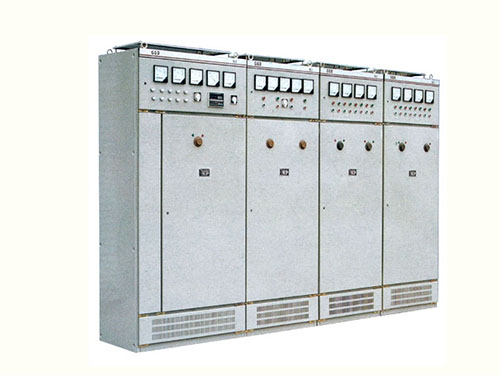 2026-03-04The box-type substation is composed of high-voltage distribution equipment, power transformers, and low-voltage distribution equipment. It is installed in a metal box, with each of the three parts occupying a separate space and isolated from each other. The box-type substation is a relatively new type of equipment. It has evolved from the initially simpler equipment to the current more complete and reliable equipment. It has the following advantages: (1) It has a small floor area, making it convenient for land acquisition, and can be installed in areas with high urban load density, rural areas, residential communities, etc., facilitating the extension of high-voltage lines and reducing the power supply radius of low-voltage lines, as well as lowering line losses. (2) It reduces the cost of civil construction foundations and can be used for construction.
Professional mechanical and electrical engineering field
contact way-
About Us
company profile corporate culture corporate image enterprise features qualification certificate Video Center sphere of business -
case
Power distribution project Central air conditioning Central air conditioning Drainage system Group telephone Network system Monitoring system -
product
Central Air-condition Low Voltage Electrical Electric Machinery Electric Generating Set Electric Valve Sensor Water Pump More -
News
Company Industry Questions -
contact us
call center contact
 Wapsite
WeChat
Wapsite
WeChatHotline:+86 138 2699 5928
Address: No. 1204-1207, 12th Floor, Building 9, Tian Gong Zhi Gu, 52 Fuhai Road, Xugang Village, Chang'an Town, Dongguan City, Guangdong Province Dongguan Xinzhou Mechanical and Electrical Air Conditioning Engineering Co., LTD 【Admin】-
Phone
+86 138 2699 5928
Hotline (Mr. Liu)
-
Consult
-

TOP
-